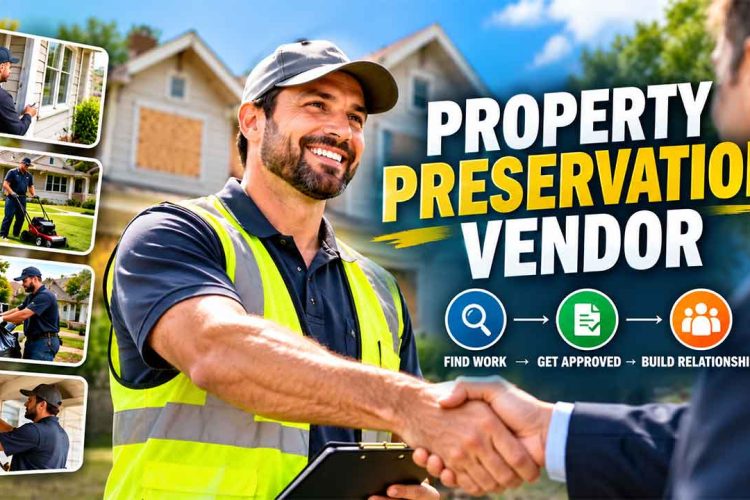

Property Preservation: What It Is, How It Works & Who Provides the Services
A vacant property does not stay “unchanged” simply because nobody is living in it.
A lawn keeps growing. A leaking pipe keeps leaking. A broken window remains an invitation to further damage. A property that looked perfectly manageable when it became vacant can require considerably more attention a few weeks or months later.
For lenders, mortgage servicers, asset managers and REO organizations, this creates a very specific operational problem: how do you protect a property you may not physically visit every day?
The answer is property preservation.
But the industry is more sophisticated than simply cleaning an empty house or fixing whatever appears to be broken. It is a coordinated field-service process involving inspections, property security, maintenance, documentation, authorized repairs and communication between organizations and local service providers.
Understanding how that system works is important because property preservation sits at the intersection of real estate, mortgage servicing, REO asset management and local contracting
Explore This Article
ToggleProperty Preservation at a Glance
Before going deeper, here are the core answers behind the topic.
What is property preservation?
In simple terms, property preservation is the process of inspecting, securing, maintaining, and protecting a property—particularly a vacant, distressed, foreclosed, or REO property—to prevent avoidable deterioration, damage, unauthorized access, and compliance problems.
The work can begin before or around foreclosure and may continue while a property is being managed, marketed, sold, or conveyed, depending on the client, investor, insurer, and applicable requirements.
The objective is not simply to make a property look attractive. Preservation is primarily about protecting the asset, documenting its condition, completing required work, and keeping the property in an appropriate condition throughout the servicing or disposition process.
What do property preservation services include?
Property preservation services can include property inspections, securing, lock changes, lawn and exterior maintenance, debris removal, winterization, snow-related services, minor repairs and other work authorized by the responsible client.
Who performs property preservation work?
Property preservation work is performed through a network that can include preservation companies, Field Service Managers, local vendors, contractors and specialized service providers. The exact structure depends on the client and program.
Is property preservation the same as property maintenance?
Not quite. property preservation and maintenance overlap, but preservation is broader. Maintenance is concerned with keeping a property in suitable condition, while preservation can also involve securing the asset, documenting its condition, responding to specific work orders and protecting it during foreclosure or REO processes.
What are property preservation field services?
property preservation field services are the physical, on-site activities performed at a property. A field provider may inspect a property, secure it, maintain the exterior, remove authorized debris, perform seasonal work or complete an approved repair.
That distinction—between the organization managing the assignment and the people physically carrying it out—is one of the keys to understanding the industry.
Why Property Preservation Exists in the First Place
The fundamental purpose of property preservation is asset protection.
Consider an REO property that has been sitting vacant for an extended period. Nobody is there to notice that a rear door no longer locks, vegetation is becoming unmanageable, a water issue has developed, or part of the property has been damaged.
Each problem may appear small in isolation.
Together, however, they can change the condition of the asset.

That is why preservation is generally proactive rather than purely reactive. The goal is to identify conditions, address authorized problems and create a documented record of what is happening at the property.
This becomes particularly important in REO operations. HUD’s current description of its REO management structure places property maintenance and preservation with Field Service Managers and specifically describes services including property inspection, securing, cosmetic repairs and ongoing maintenance.
👉 Read Here: Property Preservation Jobs
So, at its core, preservation is about answering three practical questions:
- What condition is the property in?
- What needs to be done?
- Can there be reliable evidence that the work was completed?
That last question is especially important. Modern preservation is not just physical work. It is also a documentation business.
What Happens During a Property Preservation Assignment?
There is no universal work order that applies to every property. The scope can change according to the property’s condition, location, client instructions, investor requirements and the stage of the foreclosure or REO process.
Still, the underlying workflow tends to follow a recognizable pattern.
A property first comes to the attention of the organization responsible for managing it. An inspection or another trigger identifies a need. A work order is then created with instructions for the required field activity.
The assignment may be handled through a preservation company or field-service management organization, which then coordinates with an appropriate local provider.
The local provider visits the property and performs the authorized work.
But the job does not necessarily end when the contractor leaves.
The condition of the property and the completed work generally need to be documented and reported back through the appropriate system. Depending on the assignment, this can involve photographs, notes, measurements, invoices, completion information or other supporting documentation.
The information then travels back through the management chain.
In simplified form:
Property → Inspection/Need → Work Order → Field Provider → Completion → Documentation → Client Review
This is why describing preservation simply as “maintenance for vacant homes” misses a large part of the industry.
It is a managed field-service operation.
What Services Fall Under Property Preservation?
The scope of property preservation services can vary considerably, but several activities form the backbone of the industry.
Inspection and condition reporting
Inspection establishes the current condition of the property.
A field professional may need to determine whether the property appears occupied, identify visible damage, evaluate exterior conditions, check for security concerns and document circumstances that require further attention.
The inspection is often the starting point for everything that follows.
Securing the property
A vacant property needs appropriate physical security.
Depending on the assignment, securing may involve lock changes, securing doors or windows, boarding certain openings or taking other authorized measures to prevent unauthorized access.
The important point is that securing is not simply about making a property “look locked.” It is part of protecting the asset and complying with the specific requirements of the assignment.
Exterior and lawn maintenance
A neglected exterior can quickly become a visible sign that a property is vacant.
Lawn mowing, trimming, vegetation control and other exterior maintenance can therefore become recurring preservation activities, particularly during growing seasons.
Debris removal
Vacant and distressed properties may contain debris that needs to be removed and properly disposed of.
The scope can include exterior debris, interior contents where removal is authorized, or materials created by other preservation activities.
This is one area where local rules and client instructions matter. A contractor should never assume that every item found at a property is automatically authorized for removal.
Seasonal protection
Climate creates another layer of responsibility.
Properties in colder regions may require winterization, while properties in areas affected by significant snowfall may require snow-related services. Other markets can create different seasonal requirements.
The point is not that every property receives every seasonal service. Rather, preservation adapts to the property’s location, condition and assignment requirements.
Authorized repairs
Some preservation assignments involve repairs intended to protect the property or address a specific condition.
These can range from minor corrective work to specialized services requiring qualified tradespeople.
The boundary between preservation and larger rehabilitation is important. A preservation work order does not automatically authorize a contractor to undertake every repair they believe the property needs.
The scope of authorization controls the work.
Who Actually Provides Property Preservation Services?
One of the most misunderstood aspects of the industry is the assumption that “the property preservation company” is necessarily the company whose employees perform every task.
Often, the structure is more layered.
A lender or servicer may have responsibility for the asset. A preservation or field-service organization may manage the operational process. A local vendor may then visit the property and perform the actual field work.
HUD’s REO model illustrates this distinction particularly well: Field Service Managers are companies responsible for property preservation and protection services, while Asset Managers handle the sale of the homes.
At the local level, the people completing assignments can come from very different professional backgrounds.
A single preservation network might need:
- A general property-maintenance contractor in one market
- A landscaper in another
- A locksmith for a securing assignment
- A debris-removal crew for a cleanout
- A handyman for minor repairs
- A specialist contractor for a more technical issue
This is why the vendor network is such an important part of the preservation ecosystem.
The organization managing the asset needs coverage, reliability and documentation. The local provider needs work, clear instructions and a workable process for receiving and completing assignments.
Those are different needs—and that difference will matter throughout this HiringVendors content strategy.
Are you a property preservation vendor ready to grow your business?
👉 Register your company now and start receiving real job opportunities.
Property Preservation vs. Property Maintenance
The two terms are frequently used together, but treating them as synonyms creates confusion.
Think of property maintenance as one component of a larger preservation system.
Maintenance keeps a property in an appropriate physical condition. It may include recurring lawn care, cleaning, minor corrective work and other routine activities.
Preservation has a wider asset-protection context.
It asks not only, “Does this property need maintenance?” but also:
- Is the property secure?
- What is its current condition?
- Has new damage occurred?
- What work has been authorized?
- Has the work been completed?
- Has the completion been properly documented?
- Does the property continue to meet the applicable requirements?
That broader perspective is what separates property preservation and maintenance from ordinary residential property upkeep.
A homeowner hiring someone to mow a lawn is dealing with maintenance.
A servicer coordinating an inspection, securing a vacant property, arranging authorized repairs, documenting the condition and managing recurring services is dealing with preservation.
Why Documentation Is Almost as Important as the Work
This is one of the areas where inexperienced observers often underestimate the industry.
Suppose a contractor visits a property, completes the assigned work and leaves.
From the contractor’s perspective, the job may feel finished.
From the client’s perspective, however, the organization still needs to know what happened at the property.
What was the condition when the vendor arrived? What work was performed? What changed? Were there additional issues? What evidence supports the completion?
That makes documentation a functional part of property preservation work, not administrative decoration.
For a preservation operation, the field visit and the information produced by that visit are effectively two halves of the same service.
This is also why preservation vendors often need more than physical trade skills. They may need reliable communication, appropriate technology, transportation, documentation habits and the ability to follow detailed work-order instructions.
Finding the Right Property Preservation Provider
For organizations that need preservation work completed, the challenge is not simply finding someone who can mow a lawn or change a lock.
A suitable provider should be able to handle the requirements of the assignment, communicate reliably, document completed work, cover the required geographic area, and meet applicable insurance, licensing, background-check, or other qualifications.
For vendors, the challenge is different: finding companies that need qualified service providers and getting access to legitimate work opportunities.
That is where a specialized marketplace can connect both sides of the industry.
HiringVendors provides a dedicated property-preservation category where companies can post opportunities and contractors can find active field-service opportunities across the U.S. Current listings include needs ranging from local property preservation contractors and maintenance crews to inspections, handyman work, and other field services.
property preservation is an organized field-service process designed to protect and maintain properties that require active oversight—especially vacant, distressed, foreclosure, and REO properties.
It combines inspection, security, maintenance, documentation, seasonal protection, debris removal, and authorized repairs rather than representing a single type of service.
The industry also depends on several layers of providers: servicers and asset managers, preservation companies and field service managers, and the local vendors and contractors who perform the work on-site.
For companies that need reliable field providers—and for vendors looking for legitimate preservation opportunities—the most important connection happens at the work-order level.
Looking for active property preservation opportunities or qualified vendors? Explore the Property Preservation listings on HiringVendors to see current opportunities and connect with businesses seeking field-service professionals.