
Property Preservation Vendor: How to Find Work, Get Approved & Build Contractor Relationships
Getting into property preservation can look deceptively simple: find companies that need contractors, submit an application, and wait for work orders.
In reality, becoming a successful property preservation vendor requires much more than getting your name onto a vendor list. Companies need local contractors they can depend on to reach properties on time, follow detailed work orders, document conditions accurately, communicate problems, and complete assignments according to client requirements.
That distinction matters.
A contractor may be capable of mowing lawns, changing locks, completing cleanouts, or making repairs. But property preservation companies are not buying those skills alone. They are building field-service networks capable of protecting and maintaining properties across different locations—often without the company itself ever visiting the site.
For contractors, that creates a real opportunity. It also creates a higher standard for becoming a vendor and maintaining long-term working relationships.
This guide explains how the vendor side of the industry works, what companies typically look for, where opportunities come from, and how contractors can position themselves for consistent property preservation work.
Explore This Article
ToggleQA About Becoming a Property Preservation Vendor
What is a property preservation vendor?
A property preservation vendor is a contractor or service provider that performs authorized field work on vacant, distressed, foreclosure, or REO properties. Assignments can include inspections, securing, lawn maintenance, debris removal, winterization, cleaning, repairs, and other preservation services.
How do property preservation vendors get work?
Property preservation vendors may receive work from national or regional preservation companies, mortgage field-service companies, asset-management networks, other contractors, or companies recruiting local field providers. Specialized marketplaces can also connect contractors with organizations seeking coverage.
What do companies look for before approving vendors?
Requirements vary, but companies commonly evaluate service area, relevant experience, insurance, equipment, availability, documentation capability, communication, and the contractor’s ability to follow work-order instructions.
Where can I find property preservation vendor jobs?
Property preservation vendor jobs can be found through preservation-company vendor networks, contractor recruitment pages, industry marketplaces, field-service networks, and platforms such as HiringVendors that bring job opportunities and service providers together.
Are companies still looking for property preservation vendors?
Vendor demand varies by location, service category, workload, and client network. Searches for property preservation vendors needed often reflect companies trying to fill geographic or service-coverage gaps rather than hiring traditional employees.
Understand the Business Before Looking for Work
The first mistake many new contractors make is treating property preservation like a conventional job search. It usually is not.
A preservation company may manage properties across dozens of markets without maintaining its own employee crews in every city. Instead, it can build a network of independent vendors capable of performing work where the properties are located.
HUD’s REO structure provides a useful illustration of the broader system. HUD identifies Field Service Managers as companies responsible for property maintenance and preservation, including inspections, securing properties, cosmetic repairs, and ongoing maintenance.
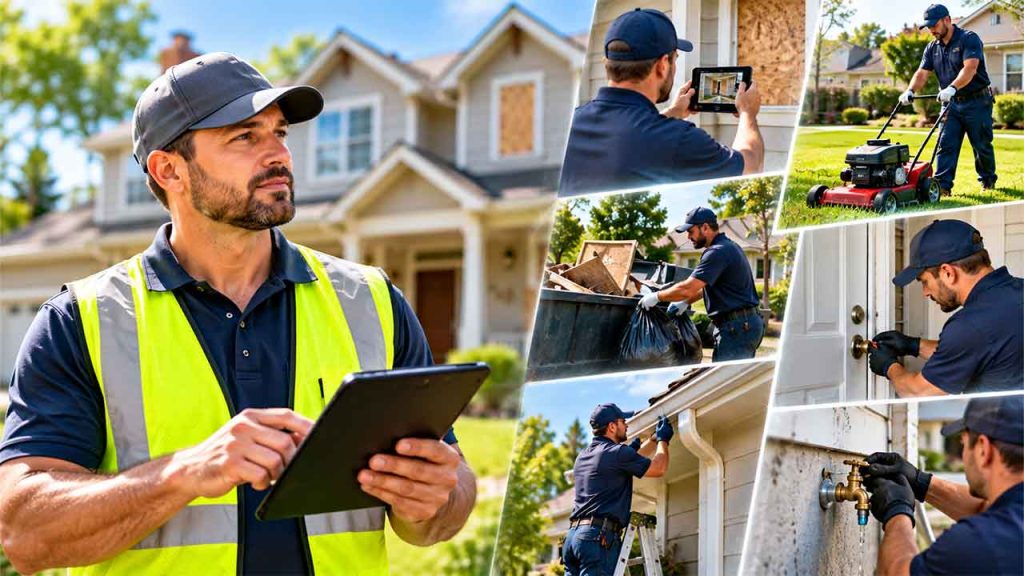
Local contractors form the execution layer of this type of field-service model. That means a company searching for a vendor in Ohio, Texas, Florida, or another market is often trying to solve a coverage problem: “We have work in this area. Who can reliably complete it?”
For a contractor, this changes the strategy completely. The objective should not simply be to submit as many applications as possible. It should be to become a credible solution for a particular geographic area and group of services.
Build a Vendor Profile That Answers the Questions Companies Actually Have
Imagine you are responsible for assigning preservation work across several counties. Two contractors contact you.
The first says: “I am interested in property preservation work. Please send me jobs.”
The second clearly identifies where they operate, what services they can perform, how far they travel, what equipment they have, their relevant experience, and how quickly they can respond to new assignments.
The second contractor has already reduced uncertainty. That is exactly what a strong vendor profile should accomplish.
Instead of presenting yourself as someone who simply “needs work,” present your operation in terms of coverage + capability + reliability.
Your service area deserves particular attention. Companies frequently need coverage at the county, ZIP-code, city, or regional level. Saying “I cover Texas” may be far less useful than specifying the counties or metropolitan areas you can realistically service within required turnaround times.
The same applies to services. Do not claim every possible trade simply to appear versatile. A contractor with genuine capability in inspections, lawn maintenance, securing, debris removal, and general preservation work can be more useful than someone claiming expertise in everything from roofing to electrical work without the resources to deliver it.
👉 Read Here: Property Preservation
Getting Approved Is About Operational Readiness
There is no single universal approval standard for every property preservation vendor. Requirements differ among companies, clients, programs, states, and types of work.
Still, the underlying question is remarkably consistent: Can this contractor complete assignments without creating additional risk for the company?
That is why vendor onboarding can involve more than a name and phone number. A company may ask about business information, geographic coverage, prior field-service experience, insurance, licenses where applicable, equipment, vehicles, technology, background screening, references, or the types of assignments the contractor can perform.
Documentation capability is especially important. Property preservation happens at physical addresses while the organizations managing those properties may be located hundreds of miles away. They need a reliable way to understand what occurred in the field.
A vendor therefore needs to be capable not only of completing the physical assignment but also of showing what was found and what was done.
For certain HUD-related preservation and protection activities, documentation is sufficiently important that HUD uses its P260 portal for requests and documentation, and mortgagees can provide system access to vendors or agents working on their behalf.
The larger lesson applies well beyond a single program: In property preservation, completing the work and documenting the work are both part of the job.
Where Property Preservation Vendor Opportunities Actually Come From
There is no single source for all preservation work in the United States. The industry is fragmented by geography, clients, servicing relationships, preservation networks, and individual contractor coverage.
That fragmentation can actually benefit vendors. A national company may have excellent coverage in one region but need additional contractors in another. A regional preservation business may win new work and suddenly need vendors across several counties. An existing vendor may lose capacity, creating an immediate coverage gap.
This is why searches related to property preservation vendors needed can be valuable. The underlying intent is often much closer to an active business need than a broad search such as “property preservation.”
Contractors should therefore think in terms of networks rather than a single employer.
National and regional preservation companies are one channel. REO and mortgage field-service networks are another. Direct relationships with companies managing preservation assignments can also matter. Industry-specific marketplaces add another route by making opportunities discoverable without requiring contractors to identify every potential company individually.
HiringVendors is designed around that connection. Contractors can discover relevant opportunities while companies that need field coverage can post jobs and reach vendors operating in the required market.
That marketplace model becomes particularly useful in an industry where the right contractor may be determined as much by location and service capability as by company size.
REO Property Preservation Vendors Operate Inside a Larger Chain
Understanding REO helps vendors understand why work orders can sometimes feel highly structured.
An REO property is not simply an empty house waiting for someone to maintain it. It sits inside a larger asset-management and servicing process.
The organization assigning work may itself be operating under requirements established by a lender, servicer, investor, insurer, government program, or another client.
HUD, for example, separates the responsibilities of Field Service Managers, who handle property preservation and protection, from Asset Managers, who are responsible for marketing and selling HUD-owned properties.
For REO property preservation vendors, that broader chain matters because instructions may originate well above the local contractor.
A vendor might notice additional work that appears necessary at a property, but that does not automatically mean the vendor is authorized to perform it. The professional response is to document the condition, communicate it through the required process, and follow the authorization procedure.
This discipline—knowing the difference between work that needs attention and work you are authorized to complete—is one of the characteristics that can separate dependable preservation vendors from inexperienced contractors.
Getting the First Work Order Is Only the Beginning
New vendors naturally focus on getting approved. Experienced vendors understand that approval has limited value if the relationship does not survive the first assignments.
Long-term contractor relationships are built in the field.
A vendor who accepts assignments outside a realistic service area, misses deadlines, submits incomplete documentation, ignores instructions, or becomes difficult to reach creates operational problems for the company assigning the work.
By contrast, a contractor who understands their capacity and communicates clearly becomes easier to work with.
That does not mean saying yes to every assignment. In fact, knowing when an assignment is outside your geographic coverage, equipment capacity, trade expertise, or schedule can demonstrate better judgment than accepting work you cannot complete properly.
The strongest relationship is not necessarily the one with the contractor who promises the most. It is often the one with the contractor whose commitments can be trusted.
Are you a property preservation vendor ready to grow your business?
👉 Register your company now and start receiving real job opportunities.
Do Not Treat a Property Preservation Vendor List as a Business Strategy
Searching for a property preservation vendor list can be a useful starting point. It can introduce contractors to preservation companies, field-service organizations, REO businesses, and other potential sources of work.
But a list by itself does not create a pipeline.
Sending the same generic application to dozens of companies without checking their coverage needs, services, requirements, or onboarding process usually produces a weak strategy.
A better approach is selective. Identify companies whose work overlaps with your actual service area. Understand the types of assignments they manage. Prepare your business documentation before applying. Make your coverage easy to understand. Then follow the company’s onboarding process professionally.
At the same time, maintain visibility in marketplaces where companies can discover you when new coverage needs arise.
The goal is to move from: “Who will give me a job?” to: “Which organizations have work that matches the operation I have built?”
That shift turns job hunting into business development.
Building a Property Preservation Business Around Relationships
A sustainable preservation operation is rarely built from one application, one company, or one work order.
It develops as contractors establish a reputation for performing within their capabilities and companies learn where those contractors can be trusted.
Start with a service area you can genuinely cover. Build processes for receiving assignments, scheduling work, capturing documentation, reporting problems, and tracking completion. Expand only when your equipment, crews, administrative capacity, and geographic reach can support it.
Most importantly, remember what the company on the other side of the work order needs. It does not simply need a person with tools. It needs a field partner capable of turning an instruction into a properly completed and documented result.
That is the real role of a property preservation vendor.
Frequently Asked Questions (FAQ)
Do property preservation vendors work as employees?
Many vendor opportunities are contractor or business-to-business relationships rather than conventional employment, although arrangements vary by company and position. Contractors should review the terms of each opportunity carefully.
Do vendors need insurance?
Many preservation and field-service companies require specified insurance coverage before onboarding contractors. Requirements vary, so vendors should verify the exact limits and types of coverage directly with each company.
Can a new contractor enter property preservation without experience?
Requirements vary. Some companies seek experienced preservation contractors, while others may consider providers with relevant maintenance, landscaping, handyman, inspection, cleaning, or construction experience. Contractors should never misrepresent their qualifications.
Are property preservation vendor jobs available nationwide?
Property preservation activity occurs across the United States, but vendor demand is highly location-dependent. Opportunities can change as companies gain clients, properties enter or leave portfolios, and contractor coverage changes.
How can vendors find companies that need contractors?
Vendors can research preservation and field-service companies, apply to relevant vendor networks, monitor contractor opportunities, and use specialized marketplaces such as HiringVendors to identify jobs and companies seeking field coverage.
From Vendor Application to Valuable Field Partner
Becoming a property preservation vendor is not ultimately about appearing on the largest number of vendor lists.
It is about becoming useful to the right organizations.
Companies need contractors who can cover the right locations, perform the right services, understand work-order boundaries, document their work, communicate clearly, and deliver what they accepted.
For contractors, that means the strongest path to more opportunities is not simply chasing every available job. Build a credible operation first, target companies whose needs match your capabilities, and then use each successfully completed assignment to strengthen the relationship.
HiringVendors helps bring those two sides of the market together. Contractors can explore property preservation opportunities and connect with businesses seeking field-service coverage, while hiring companies can post jobs when they need qualified vendors in specific markets.
Explore current property preservation opportunities on HiringVendors and position your business where companies are actively looking for field-service support.